
 Interview with Mrs. Sophea Pheach OUM
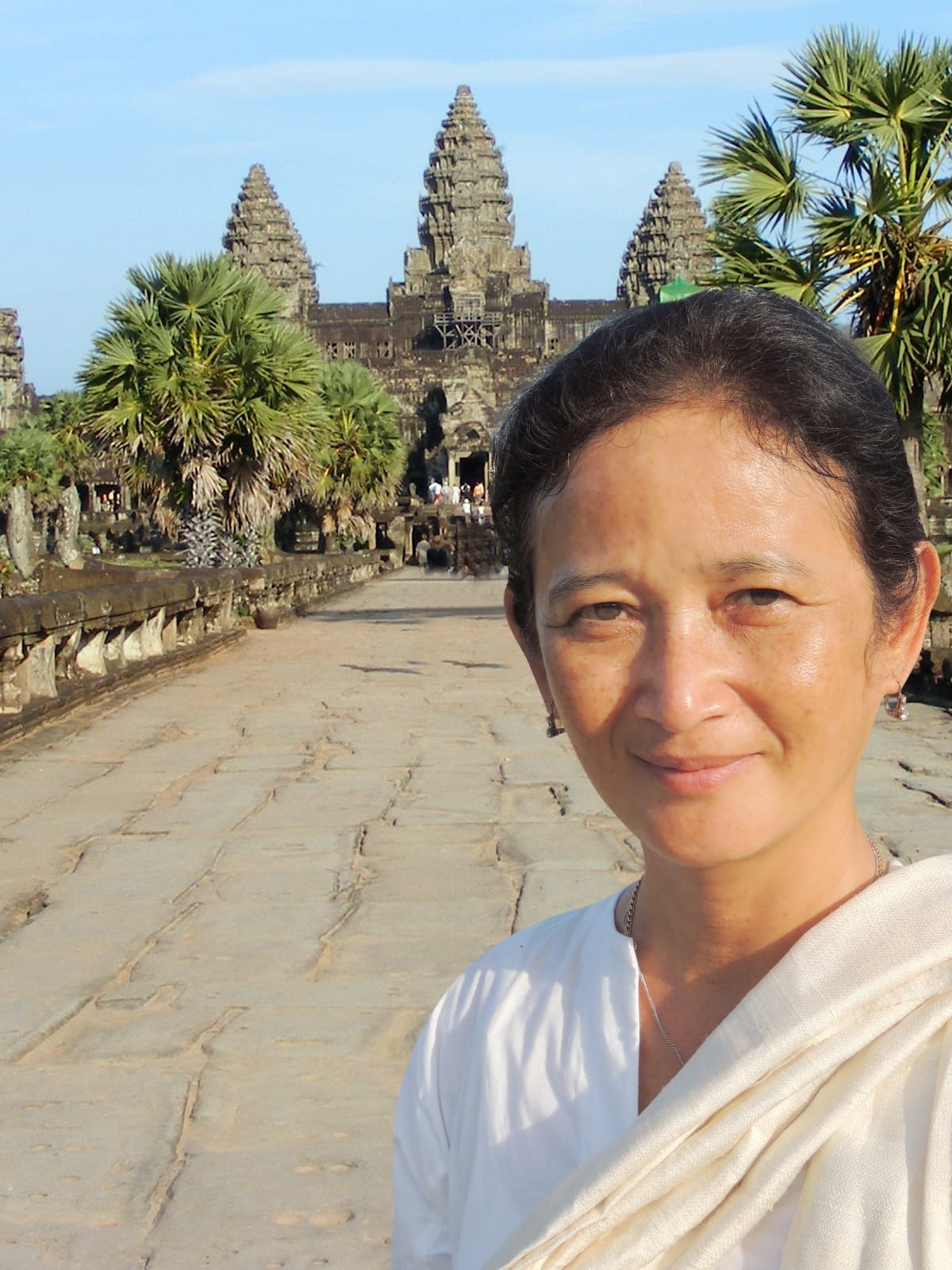
Founded in 2002, Golden Silk Pheach was born from a life journey shaped by exile, resilience, and a deep attachment to Khmer culture. Its founder, Mrs. Sophea Pheach OUM, comes from a family of diplomats and escaped the tragedies of Cambodian history thanks to her father’s posting to the Cambodian Embassy in Uruguay. Later becoming a political exile in France, she chose, from 1988 onwards, to dedicate herself to humanitarian action by volunteering in refugee camps along the Thai border. After years devoted to humanitarian aid and the creation of one of Cambodia’s very first orphanages, another conviction emerged: no longer to evoke compassion, but to restore a people’s pride. By turning to Cambodia’s millennia-old heritage and restoring meaning to artisanal craftsmanship, this ambition took shape. Golden Silk Pheach was thus founded with a clear mission: to preserve an ancestral know-how threatened with disappearance and to revive Khmer golden silk, a symbol of refinement, memory, and cultural dignity. Through the transmission of ancient techniques and the valorization of today’s artisans, the initiative stands as a bridge between the history of the Khmer Kingdom and its contemporary creation.
Q: What role does silk play in Cambodian culture, and more specifically golden silk?
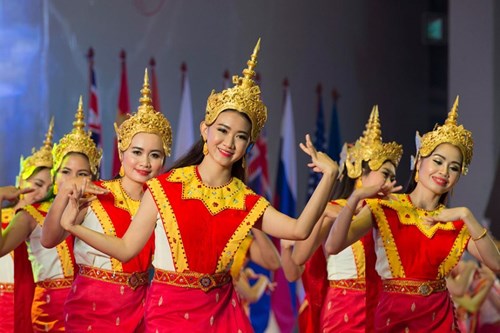
A: Silk has always held a special place in Khmer culture. The extreme care given to the costumes of the Apsaras, the classical dancers, bears witness to this importance. Originally, silk was reserved for the royal court. Gradually, each province and village appropriated this art, developing its own motifs and color palettes inspired by local flora.What few people know is that only one endemic species, the Bombyx mori polyvoltin, can produce golden silk. This production was specific to the Khmer Empire and remains, to this day, exclusively Cambodian.
Q: Why is the production of golden silk so complex?
A: Producing this silk is a true challenge. The golden silk filament is extremely short—around 100 meters, compared to nearly 1.5 kilometers for white silk. This characteristic makes any form of mechanization impossible, particularly during reeling and spinning. Today, many souvenir shops in Cambodia import silk from China, sometimes woven locally, under the label “Cambodian silk.” Golden Silk Pheach is the only entity that preserves the Khmer tradition in its entirety, from mulberry cultivation to the final weaving.
Q: What was the original goal of Golden Silk Pheach and what challenges were encountered?
The challenges were numerous—and still are. The page was blank. Due to the upheavals of history, ancestral knowledge had disappeared. It took ten years of relentless work to rediscover the processes, often starting from simple old photographs.
It was also necessary to train and raise awareness among local communities about the delicacy of this art, while facing climate change and its consequences, without ever abandoning ancestral methods.
Meanwhile, the world was changing: the internet, social networks, and new modes of communication profoundly transformed the environment. While focus remained on the core crafts, the surrounding context had shifted. Adapting to this revolution remains an ongoing process, sometimes at odds with the quest for meaning and memory.
Q: Who are the women working at Golden Silk Pheach?
A: Women make up 80% of the workforce and come from surrounding villages. Each begins by working in silkworm breeding, then follows the thread through every stage of its transformation.
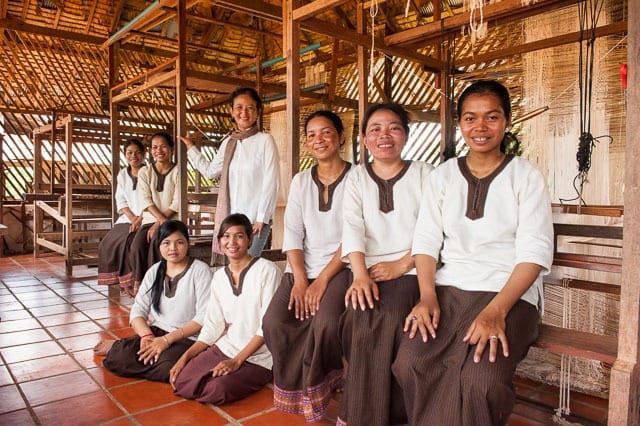
Once familiar with the entire process, each returns to the workshop where she feels most fulfilled and able to excel, alongside other women who share similar skills and affinities. In this way, a true community is formed, founded on transmission and respect for craftsmanship.
Q: Can you describe the golden silk production process?
A: It all begins with the planting of mulberry trees, followed by silkworm breeding in the magnanery. Next comes spinning, which alone includes six distinct stages, followed by degumming.
Depending on the nature of the thread (weft, warp, fine silk, or wild silk), the silk is then worked in different workshops and may undergo one or several dyeing processes.
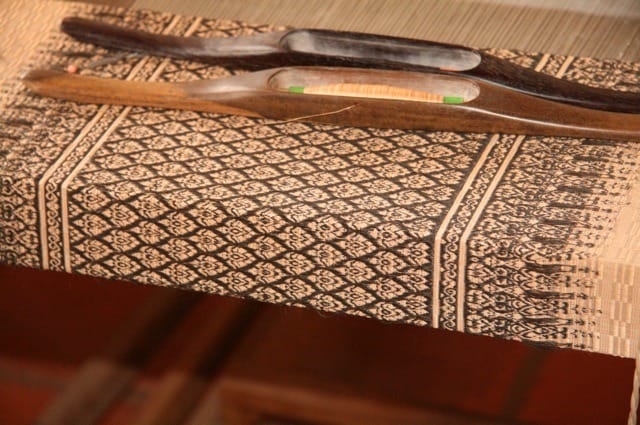
Several weaving techniques are used: broché, ikat, brocade, brocatelle, royal brocatelle, as well as combinations of these techniques. In all cases, particular care is given to setting up the loom, especially the warp threads.
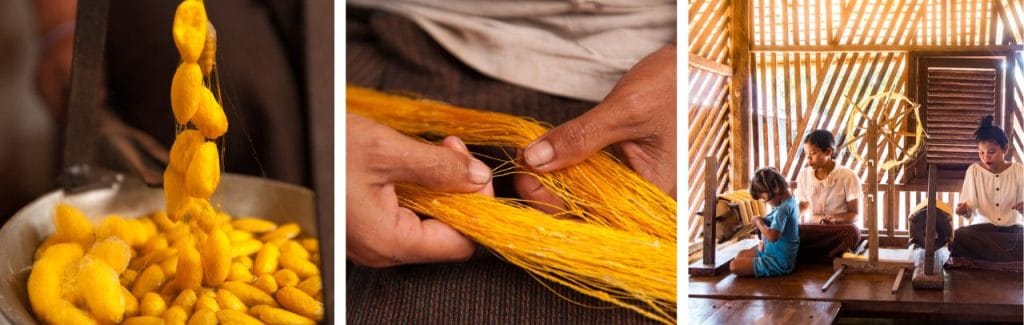
Q: How can the Golden Silk Pheach Preservation Center be visited, and what experience is offered to visitors?
A: Due to logistical constraints, the richness of Khmer heritage, and the royal splendor that Golden Silk Pheach has made its mission to preserve, a visit to the Preservation Center transports visitors into another time and space. Here, contemporary artisans, by perpetuating age-old gestures, bring to life the silks and motifs immortalized in the bas-reliefs of the Angkor temples. To best guide visitors and help them understand complex stages, visits to the Preservation Center are offered exclusively by appointment.
We thanks BAKSEY SOUR Travel (Phoenix Voyages Group), which organizes these visits and has grasped the essence of this work. Beyond the logistical management involved, BAKSEY SOUR Travel offers its clients a discovery that creates a true link between the beauty frozen in the stone of the temples and the soft lightness of textiles imbued with a centuries-old art.